
Kitchen cabinet refacing promises a new look for less money and less mess. Sometimes it delivers. More often, homeowners learn partway through that the savings disappear once their project steps outside a narrow set of conditions.
At Sean’s Cabinetry, we build new custom cabinets and don’t offer refacing. We’ll be upfront about that, and just as upfront about the kitchens where refacing is a reasonable choice. These six considerations will help you decide whether kitchen cabinet refacing is worth it for your home.
What Is Kitchen Cabinet Refacing?
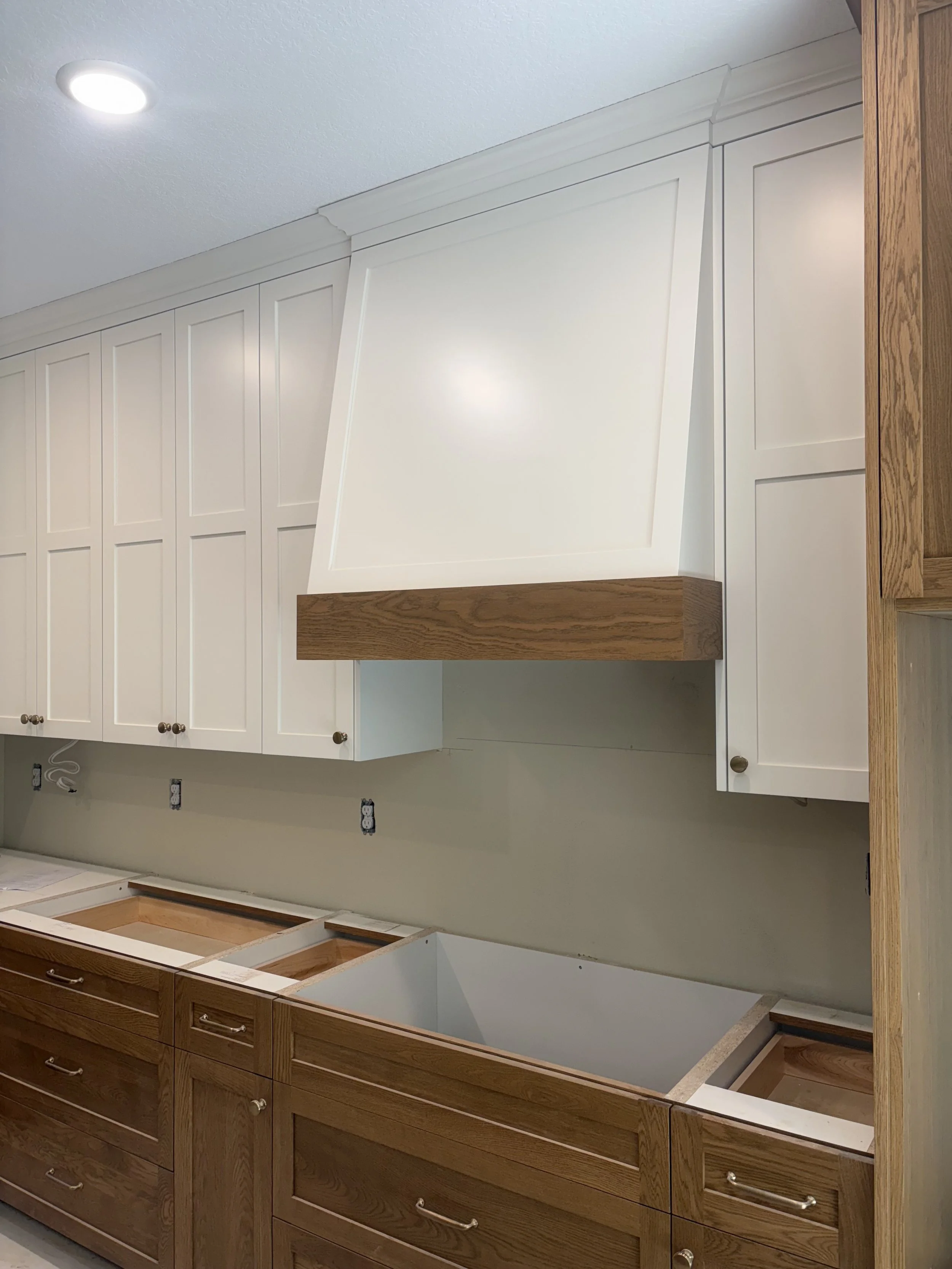
Kitchen cabinet refacing replaces the parts of your cabinets you see and keeps the parts you don’t. A refacing company installs new doors and drawer fronts, covers the existing face frames and exposed cabinet sides with veneer or laminate, and usually adds new hardware. The cabinet boxes, interiors and layout stay exactly as they are.
1. The Real Cost of Refacing
Most homeowners consider refacing because they expect it to cost less. According to HomeAdvisor, kitchen cabinet refacing averages about $7,230 nationally, with most homeowners spending between $4,234 and $10,226. That’s roughly $150 to $450 per linear foot, depending on whether you choose laminate, wood veneer or solid wood.
Those figures assume a simple job. Add new drawers, door-to-drawer conversions or repairs to damaged boxes, and the price climbs quickly.
“Most homeowners have been led to believe that refacing will cost them less than a new kitchen,” says Zach Pryor, project manager and designer at Sean’s Cabinetry. “If they fit all of the qualifications, then they are probably right. But anytime they deviate from that narrow path of what works for refacing, the cost is typically equal to or often higher than new cabinetry.”
Ask yourself: Is my project truly doors and drawer fronts only, or will it grow once work begins?
2. The Condition and Construction of Your Cabinet Boxes
Refacing keeps your existing boxes, so their condition decides how long the result will last. When Zach evaluates an older kitchen, he starts with the shelves and cabinet bottoms, especially under the sink. “That’s where there’s usually water damage and mold,” he says.
He also checks for thin side walls and exposed ends that are “a glorified wallpaper on pressboard.” Construction style matters as well. Refacing works best on standard face-frame cabinets with a 1/2" overlay, not inset or full-overlay cabinets.
A new face on a damaged or weak box is still a damaged or weak box, and no amount of kitchen cabinet refacing changes what’s underneath.
Ask yourself: What are my cabinets made of, and what does the cabinet under my sink look like?
3. Your Drawers and Slides
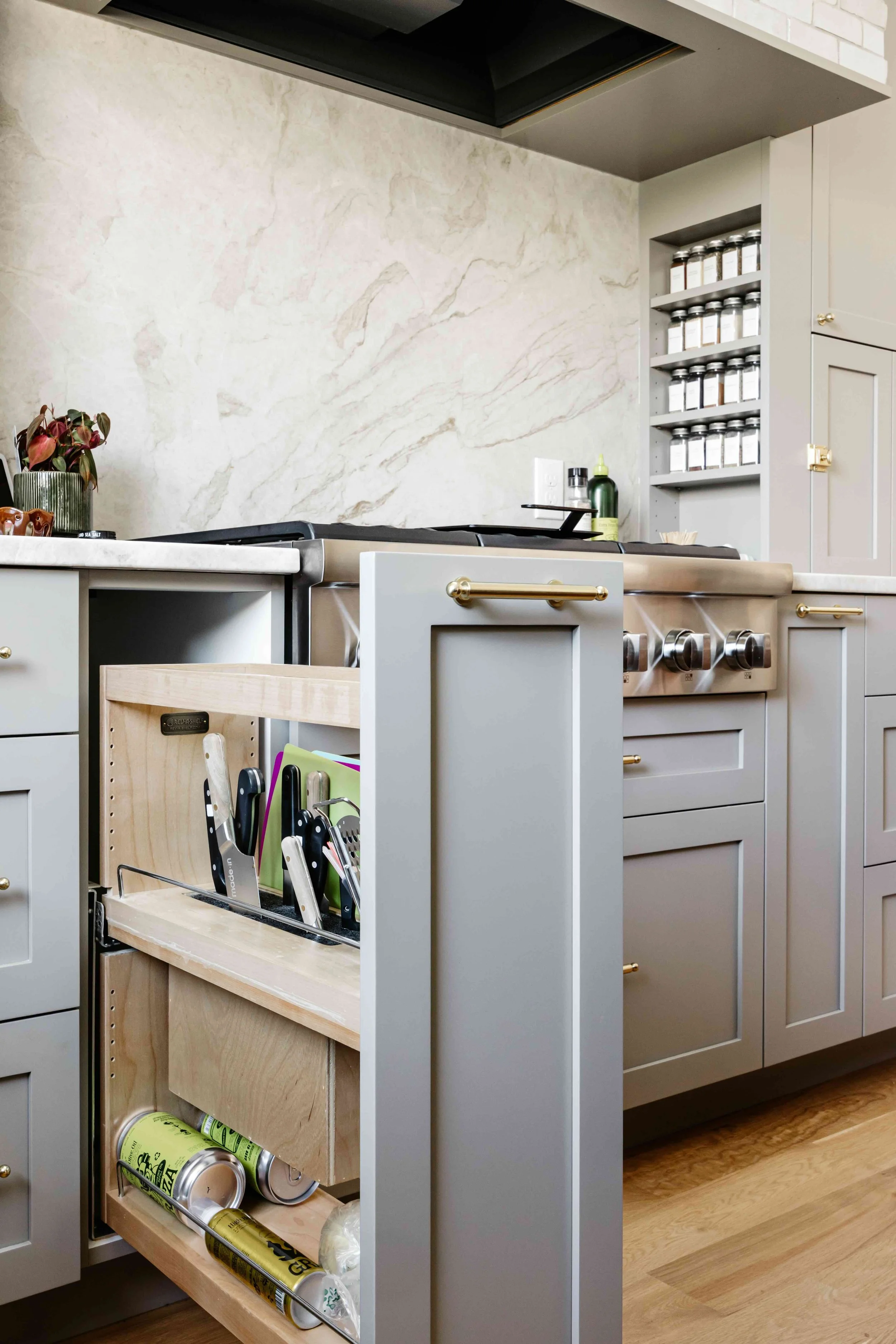
Refacing only changes drawer fronts. If your drawer boxes are worn, your slides stick, or you want to turn some doors into drawers, that work is added on top of refacing. It’s often where the numbers flip.
“Usually the amount of on-site labor to switch out and remount the proper slides ends up costing more money than replacing cabinets completely,” Zach says.
Ask yourself: Do my drawers open smoothly and hold up today, and do I want more drawers than I have now?
4. Why Kitchen Cabinet Refacing Can’t Change Your Layout or Storage
Refacing locks you into your current footprint. Moving the sink, adding an island, widening a walkway or making room for a larger range all require new cabinets.
Many older kitchens are also gang built: a few long cabinets with multiple doors and drawers instead of individual units. “Any changes to layout means those cabinets have to go,” Zach says. A homeowner we worked with recently hoped to keep her existing cabinets, which held real sentimental value. Her wish list included several layout changes, and her gang-built cabinets made refacing impossible.
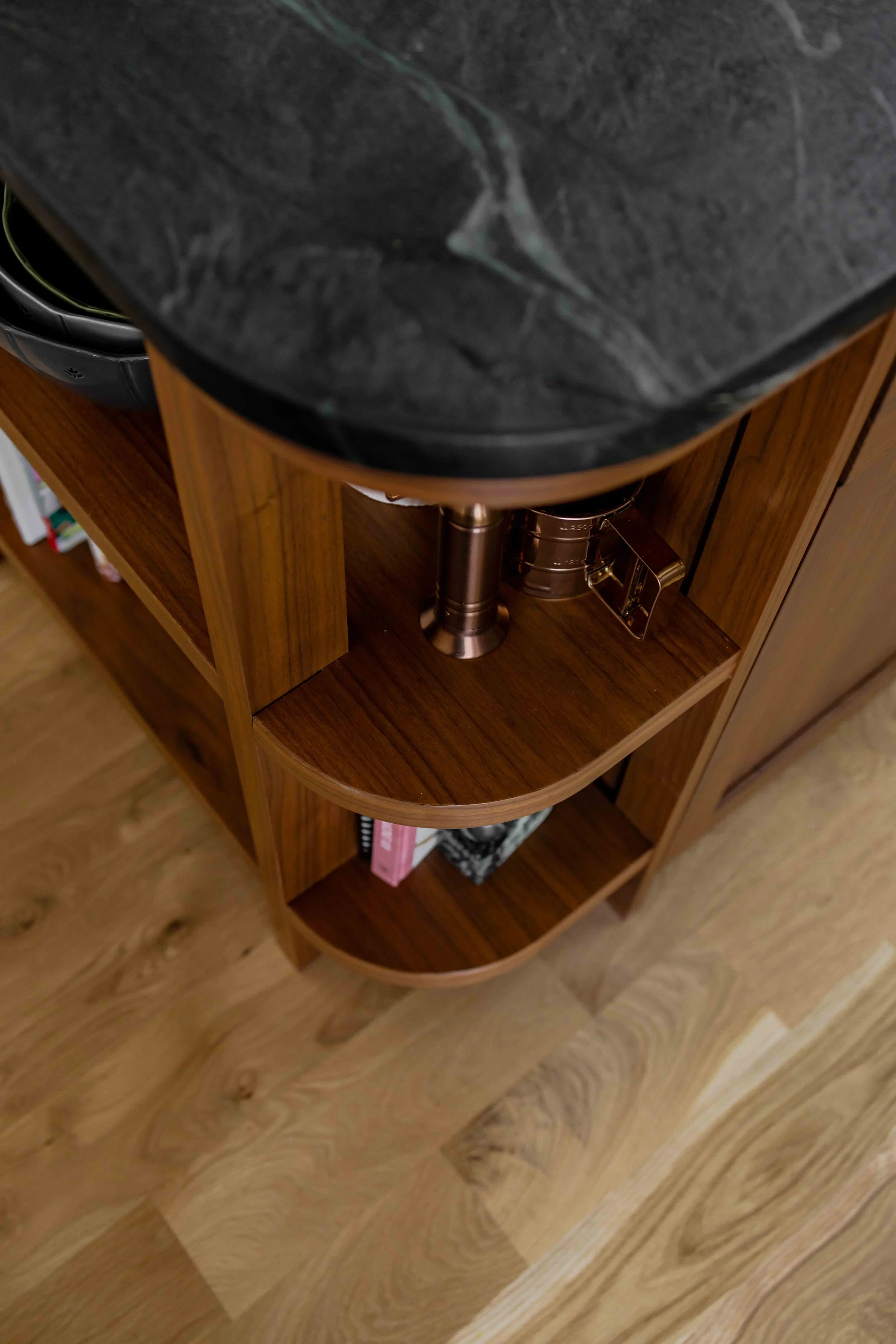
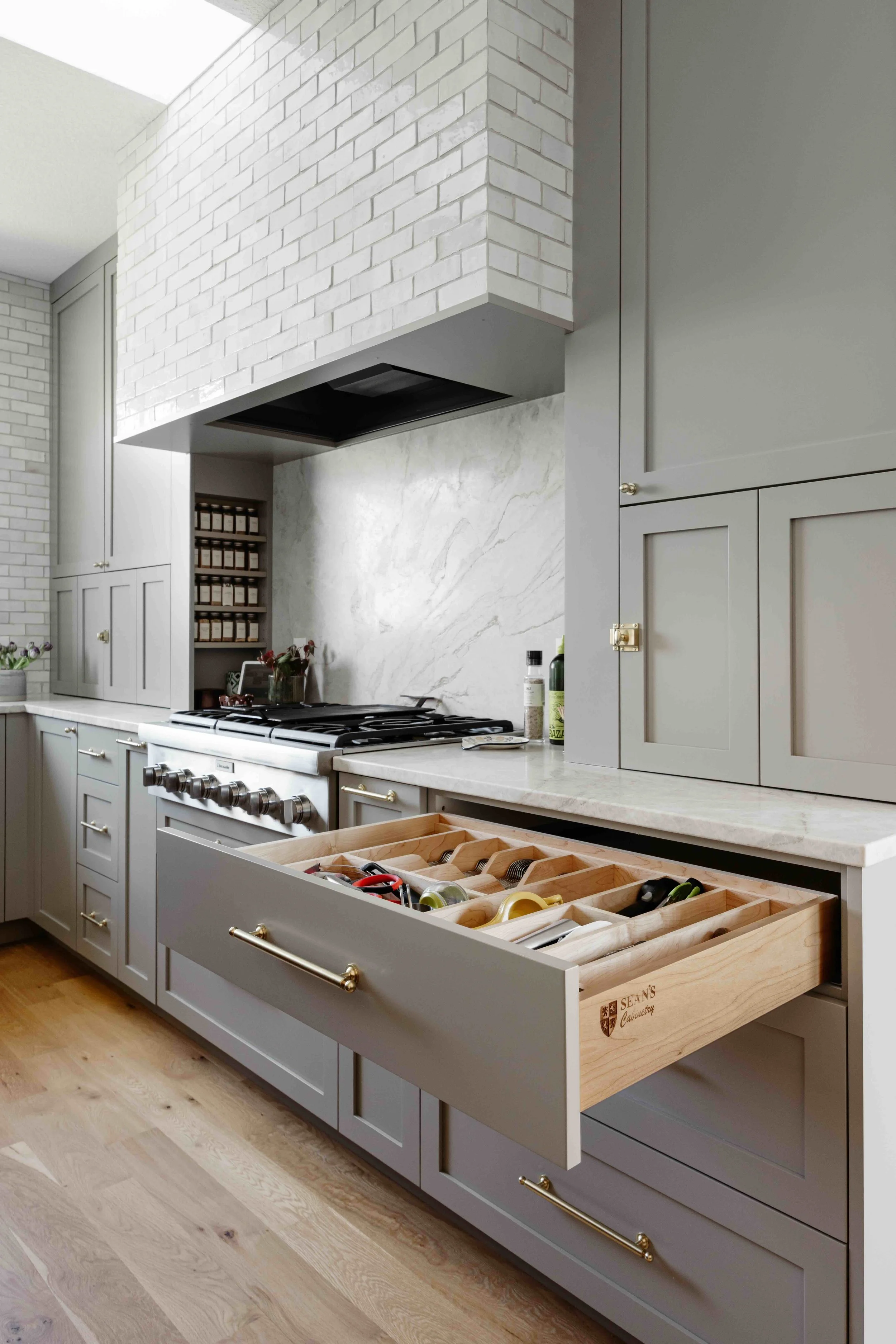
Asked what new cabinets can do for layout and storage that refacing can’t, Zach answered in one word: “Everything.” New cabinetry starts with a clean slate, so you can plan pull-outs, deep drawers, organizers and frameless boxes with full access to the interior.
Ask yourself: Does my kitchen work the way I want it to, or am I living with problems I’d fix if I could?
5. Your Countertops and Backsplash
Two of the first conditions Zach lists for refacing to work are keeping your current countertops and keeping your current backsplash. Once those are being replaced, your project has become a larger kitchen remodel, and it makes sense to compare the cost of new cabinets before committing to refacing.
Ask yourself: Am I planning new countertops or a new backsplash now or in the next few years?
6. Finish Quality and Long-Term Satisfaction
Refacing has visible limits. Doors are often finished in laminate, the edges of coverings applied over old face frames can show, and those surfaces can begin to lift over time. Color changes have limits too: going from stain to paint can leave wood grain showing through, and going from a lighter stain to a darker one can leave the finish blotchy.
“When you have extremely high standards of color, consistency, fit and finish quality, refacing almost never meets those,” Zach says.
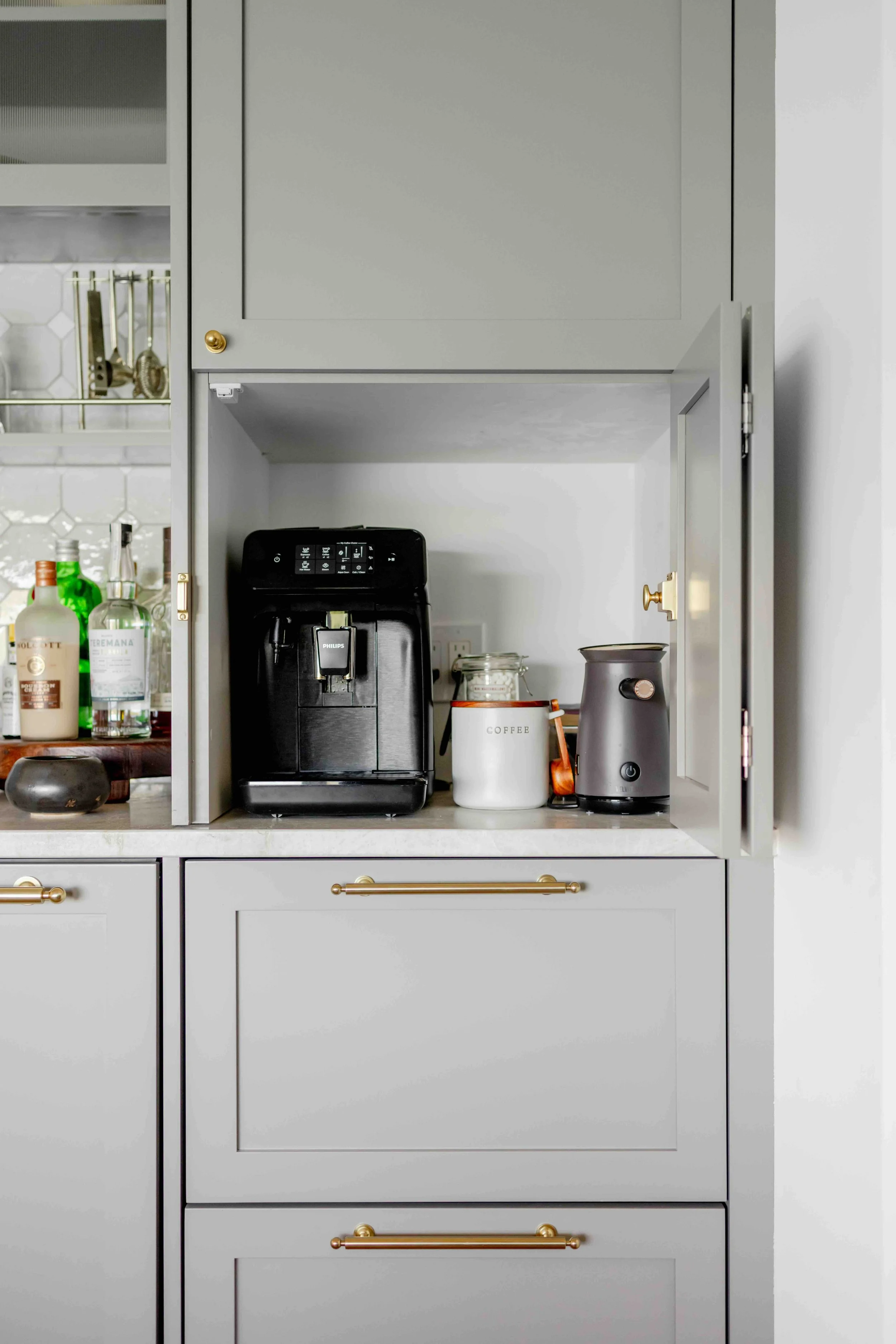
We regularly meet homeowners who tried kitchen cabinet refacing first and called us later. “I have yet to have a client who is fully satisfied with a refacing project,” Zach says. Their most common complaints are laminate doors they expected to be wood, visible edges, and surfaces coming off the old cabinets.
Ask yourself: How particular am I about finish, and how long do I plan to stay in this home?
When Kitchen Cabinet Refacing Makes Sense
Refacing isn’t always the wrong choice. It works well for homeowners who are keeping their current countertops and backsplash and don’t want to change the layout at all. Their drawer boxes and slides should be in great shape, with no plans to convert doors into drawers. Their cabinets should have standard face-frame construction with a 1/2" overlay. They should also be comfortable with wood grain showing through paint, or with some blotchiness when going to a darker stain.
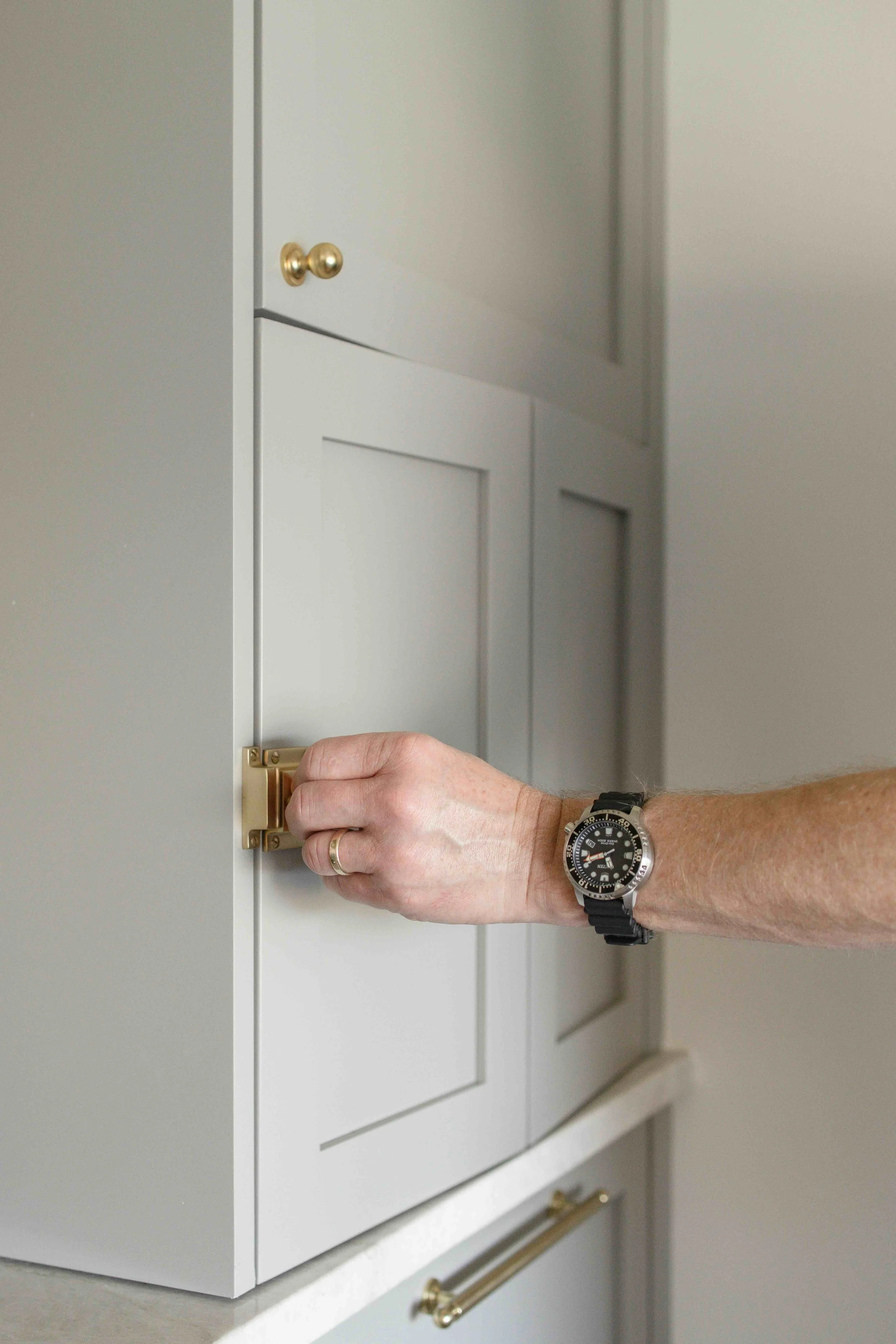
“If a client can check all of these boxes, then refacing works,” Zach says. If even one doesn’t fit, new cabinets are usually the better investment.
Frequently Asked Questions
Is kitchen cabinet refacing cheaper than new cabinets?
Only when your kitchen fits the checklist above. Once a project goes beyond it, refacing typically costs as much as new cabinetry or more.
Can you reface particleboard cabinets?
It can be done, but the new face sits on the same pressboard box, with the same thin walls and any existing water damage.
Can you change the layout when refacing?
No. Refacing keeps your existing boxes in place, so any layout change means new cabinets.
Considering Kitchen Cabinet Refacing? Talk to Us First
If you’re weighing kitchen cabinet refacing against new cabinets, we’re happy to look at your kitchen and give you an honest answer, even if that answer is refacing. We don’t offer kitchen cabinet refacing ourselves, but we’ll never steer you toward a project you don’t need. If your cabinets are solid, your layout works and your kitchen checks every box, we’ll tell you so.
We hate waste. Sometimes the smartest choice is keeping the cabinets you love because they still have years of life in them. Other times, it’s keeping money in your pocket instead of spending it on kitchen cabinet refacing that won’t last. Either way, our goal is to help you make a decision you’ll still feel good about years from now.
We’d rather earn your trust than make a quick sale. Whether you’re ready for new cabinets today or planning a kitchen, bath or built-in project down the road, we want to be the team you call. Start your design with Sean’s Cabinetry, and let’s talk through what’s right for your home.