
Kitchen Layout Ideas: Finding the Right Fit for Your Home
At Sean’s Cabinetry, we’ve had the privilege of working alongside incredibly talented designers throughout the Twin Cities, and one thing we never get tired of is seeing how differently each team approaches a kitchen layout. After countless remodels and new builds, we can confidently say no two kitchens are ever the same. And that’s exactly how it should be. Every kitchen tells a story about how a family lives, gathers, cooks, and connects.
While open floor plans are still a favorite for many homeowners, not everyone has the option to completely rework their footprint. City living often means working within existing walls, and honestly, that constraint can lead to some of the most thoughtful, efficient kitchens we build. There is something special about a well-designed, more compact kitchen where everything has its place, traffic flow makes sense, and function quietly leads the way.
In this blog, we’re sharing a collection of favorite Sean’s Cabinetry projects that highlight a range of kitchen layout ideas, including galley kitchens, single-wall kitchens with islands, broken L-shaped designs, U-shaped kitchens, and classic L-shaped layouts.
1. Galley Kitchen
A galley kitchen is a long, narrow kitchen layout with parallel countertops and cabinetry running along opposite walls, creating an efficient corridor-like walkway for a streamlined workflow. This design places the sink, stove, and refrigerator within easy reach of one another. As everything is contained within two walls, a galley kitchen maximizes storage and functionality in a minimal space. It is a smart solution for compact urban living, where space is limited but performance still matters.
You’ll often find this kitchen layout in historic, narrow homes, especially older city properties and classic Victorian terrace houses, where room widths naturally lend themselves to this style of layout. While the enclosed shape can sometimes feel more closed-off than open-concept kitchens, thoughtful lighting, lighter finishes, and clear sightlines at one or both ends can make the space feel bright and inviting. With careful planning, a galley kitchen proves that even a small, narrow footprint can deliver impressive efficiency, storage, and timeless character.
2. L-Shaped Kitchen Layout
The classic L-shaped kitchen layout remains one of the most popular kitchen layout choices in residential design, and it is easy to see why. By running cabinetry along two adjoining walls, this kitchen layout naturally creates an efficient work zone while still leaving the room feeling open and easy to move through. It adapts beautifully to both small and medium-sized kitchens, making it functional for multiple family members at the same time.
In this particular project, we were honored to craft the custom cabinetry in collaboration with the talented team at construction2style. The rich dark walnut cabinetry instantly sets the tone, bringing warmth, depth, and a sense of quiet luxury to the space. Paired with sleek hardware and dark surfaces, the kitchen feels grounded and sophisticated while still being incredibly livable. Because this was a larger kitchen, the kitchen layout had room to breathe, allowing each zone to feel intentional and well balanced.
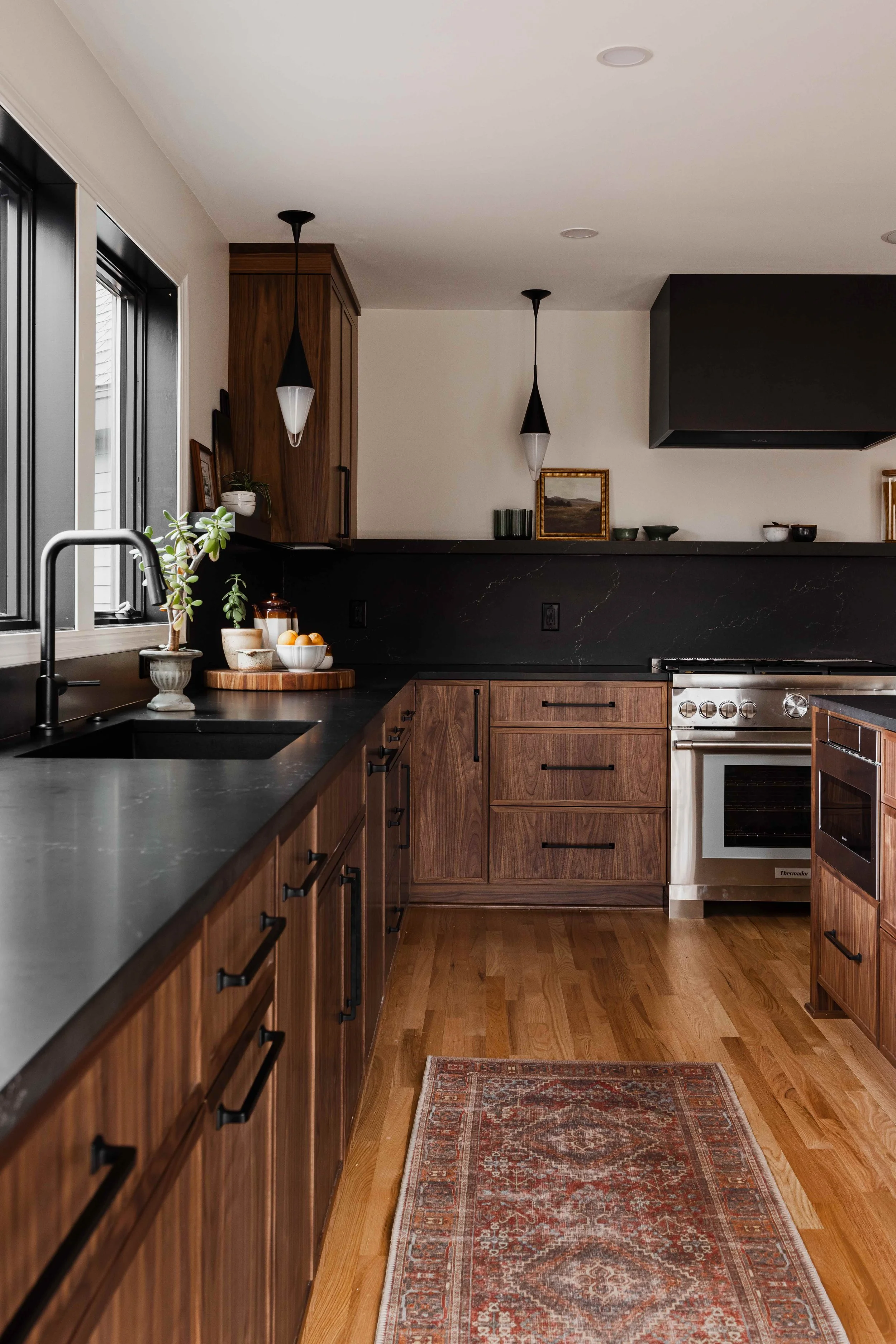
One of the strengths of an L-shaped kitchen layout is how easily it supports thoughtful design upgrades. Extending cabinetry to the ceiling maximizes storage and draws the eye upward, making the space feel taller and more complete. Layered lighting, including pendants, under-cabinet lighting, and recessed fixtures, ensures the kitchen feels welcoming at all times of day while also supporting task work where it matters most. Integrated and smart appliances help maintain a seamless look, allowing the cabinetry to remain the visual focus.
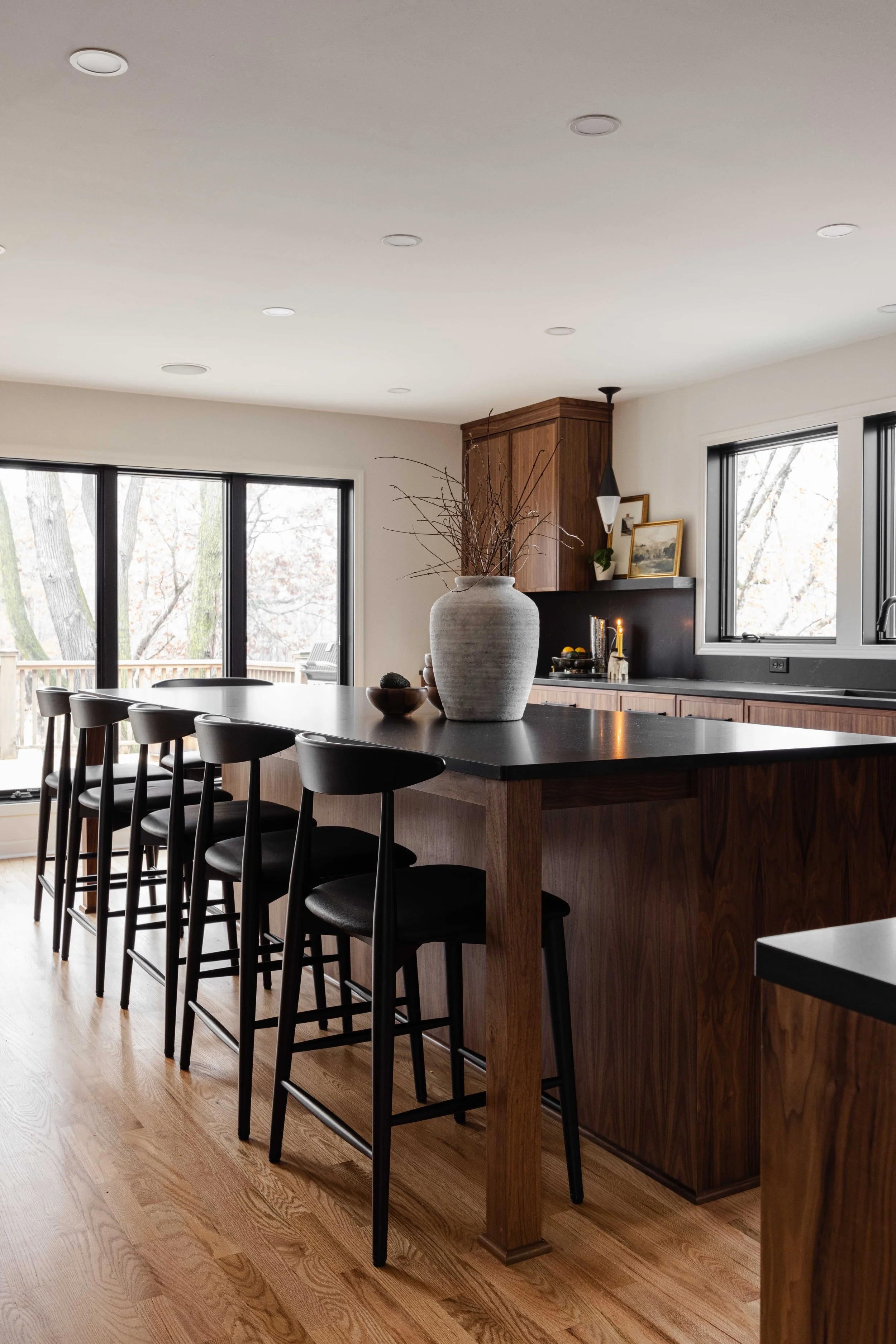
The island plays an important supporting role in this kitchen layout. Adding bar stools along one side creates an everyday gathering spot, while placing a chair at the corner invites conversation and keeps the kitchen connected to the surrounding living areas. Open or floating shelves can also be incorporated to soften the overall look and provide space for personal touches, from everyday dishes to meaningful décor.
An L-shaped kitchen layout offers a balance of efficiency, flexibility, and style. It creates a natural workflow, generous storage opportunities, and plenty of room for gathering, making it a kitchen layout that continues to serve modern families beautifully, no matter the size of the home.
3. Single Wall Kitchen Layout
A one-wall kitchen layout is a smart solution for both compact homes and open-concept layouts where every inch matters. By placing cabinetry, appliances, and prep space along a single wall, this design keeps the footprint minimal while still delivering strong functionality. The overall look feels clean and streamlined, allowing the kitchen and living spaces to flow naturally together without visual clutter.
We often see this layout paired with a hardworking island, which becomes an essential extension of the kitchen. When wall space is limited, adding a sink or cooktop to the island helps balance the design and keeps the workflow smooth between prep, cooking, and cleanup. The island also provides valuable storage and seating, making it a true centerpiece for everyday living and entertaining.
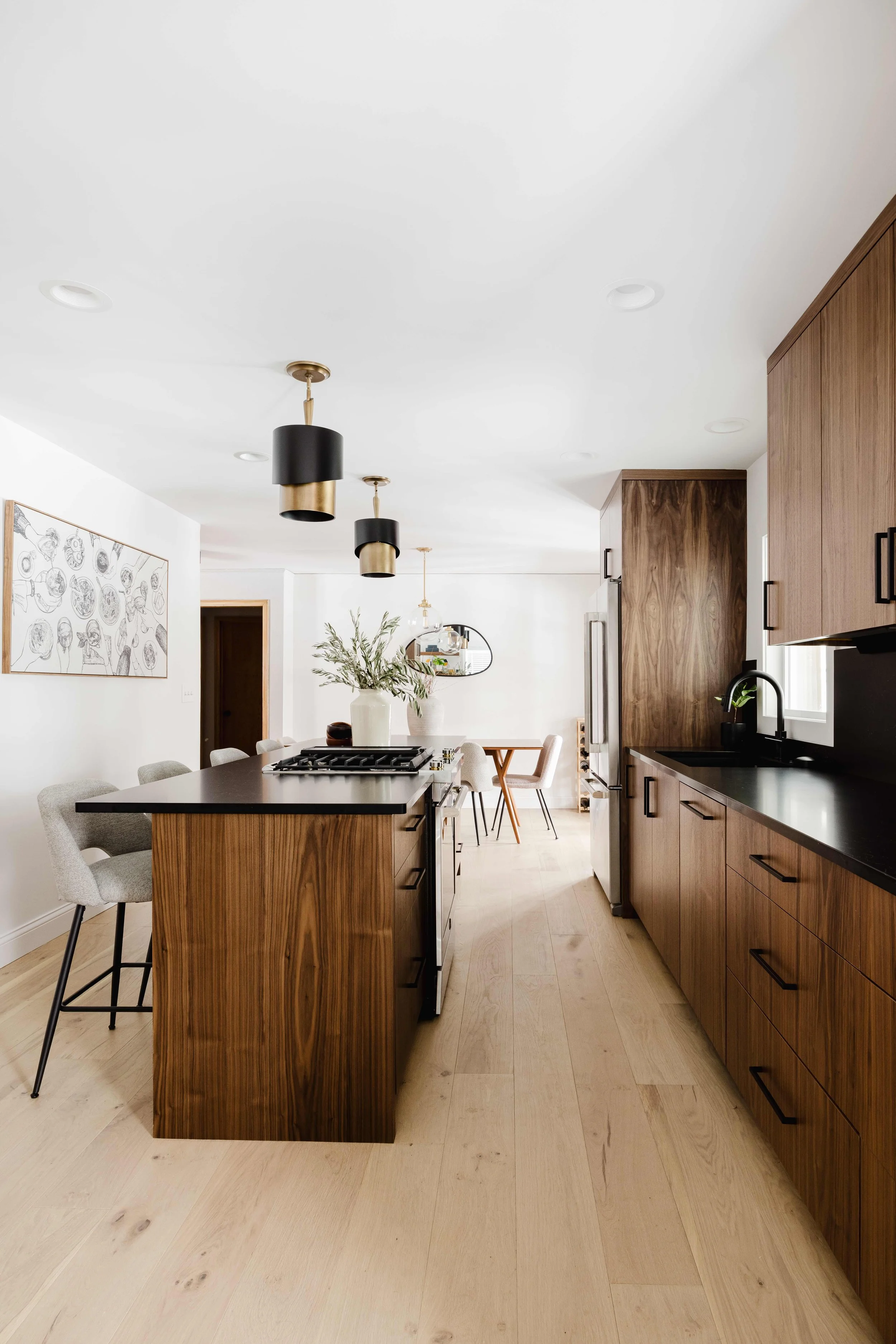
There are a few considerations to keep in mind, but with thoughtful planning, they are easy to address. Since everything is arranged along one wall, surface space can be more limited, which is where an island really shines. Storage can also feel tighter at first, especially for pots, pans, and utensils. However, incorporating deep drawers and custom cabinetry within the island can easily make up for that and create a highly functional storage system.
The benefits of a one-wall kitchen are hard to overlook. Its compact design frees up room for additional furniture, like a dining table or lounge seating, which is especially valuable in open floor plans. With the main work zones lined up side by side, the layout supports an efficient workflow and reduces unnecessary movement. It can also be more cost effective, since fewer cabinets and shorter countertop runs often mean lower material and installation costs.
When designed well, a one-wall kitchen feels surprisingly spacious and highly livable. It delivers everything you need in a clean kitchen layout.
4. Broken L- Shaped Kitchen Layout
A broken L-shaped kitchen offers a smart twist on the traditional L-shaped layout. While a classic L-shape relies on two solid, perpendicular walls to create a continuous run of cabinetry and countertops, a broken L-shape has one leg interrupted by a doorway, window, or walkway. This break means cabinets and appliances are placed on adjacent but non-continuous walls, creating a layout that feels more open and flexible.
Rather than one uninterrupted corner-to-corner workspace, the broken L naturally separates zones. For example, the range and hood may live on one wall while the sink or prep area shifts to another section of the room or even onto an island. This subtle separation can actually improve how the kitchen functions, especially in busy households, by easing traffic flow and preventing everyone from gathering in the same spot.
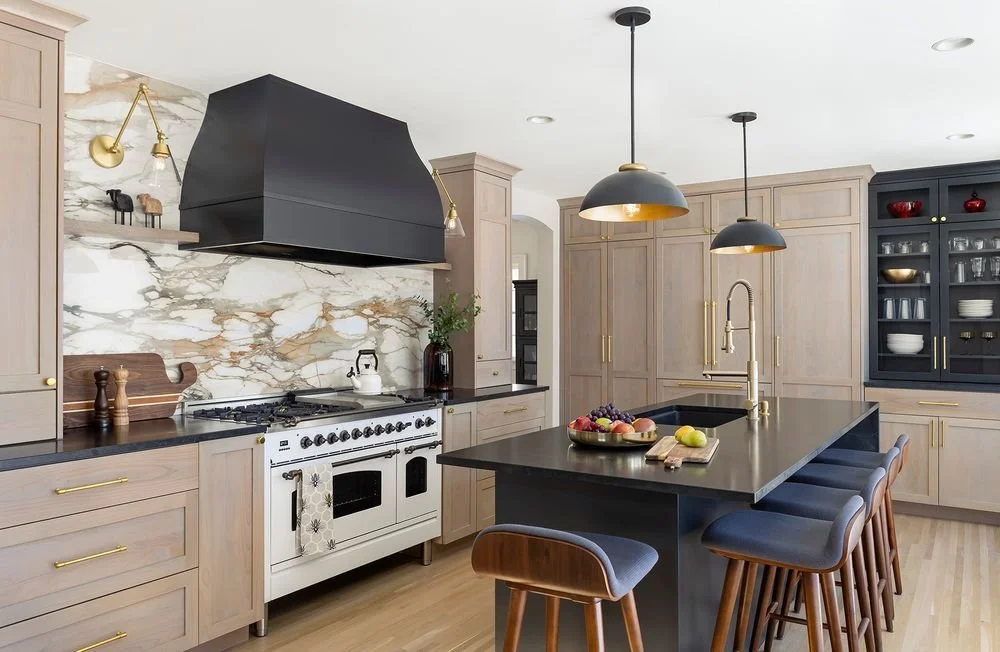
Visually, this layout often feels lighter and less enclosed than a traditional L-shape. Openings for windows or passageways bring in more natural light and maintain better connections to nearby rooms. An island frequently becomes the anchor in a broken L-shaped kitchen, bridging the gap between the two cabinet runs and restoring a sense of cohesion to the workflow. Seating at the island also helps turn the transition spaces into social zones, where family and guests can gather without interrupting the main cooking areas.
The key difference comes down to continuity versus flexibility. A traditional L-shaped kitchen layout emphasizes a tight, efficient corner workspace, while a broken L-shape spreads functions slightly apart to accommodate architecture and circulation. When thoughtfully designed, a broken L-shaped layout balances openness, movement, and function, making it a great solution for homes where doorways, windows, or pathways shape the footprint of the kitchen.
5. U-Shaped Kitchen Layout
If you’ve ever lived in an older home in St. Paul, this layout will feel instantly familiar. A U-shaped kitchen, sometimes called a horseshoe kitchen, features three connected walls of cabinetry and countertops that form the shape of a “U.” This classic design has stood the test of time because it is efficient, organized, and offers generous workspace.
At Sean’s Cabinetry, we love how this configuration naturally creates multiple work zones, making it ideal for families who enjoy cooking together. With cabinetry wrapping three sides, there is abundant storage and prep space, and the layout comfortably supports the kitchen work triangle between the sink, range, and refrigerator. It feels structured in the best way, with each wall serving a clear purpose.
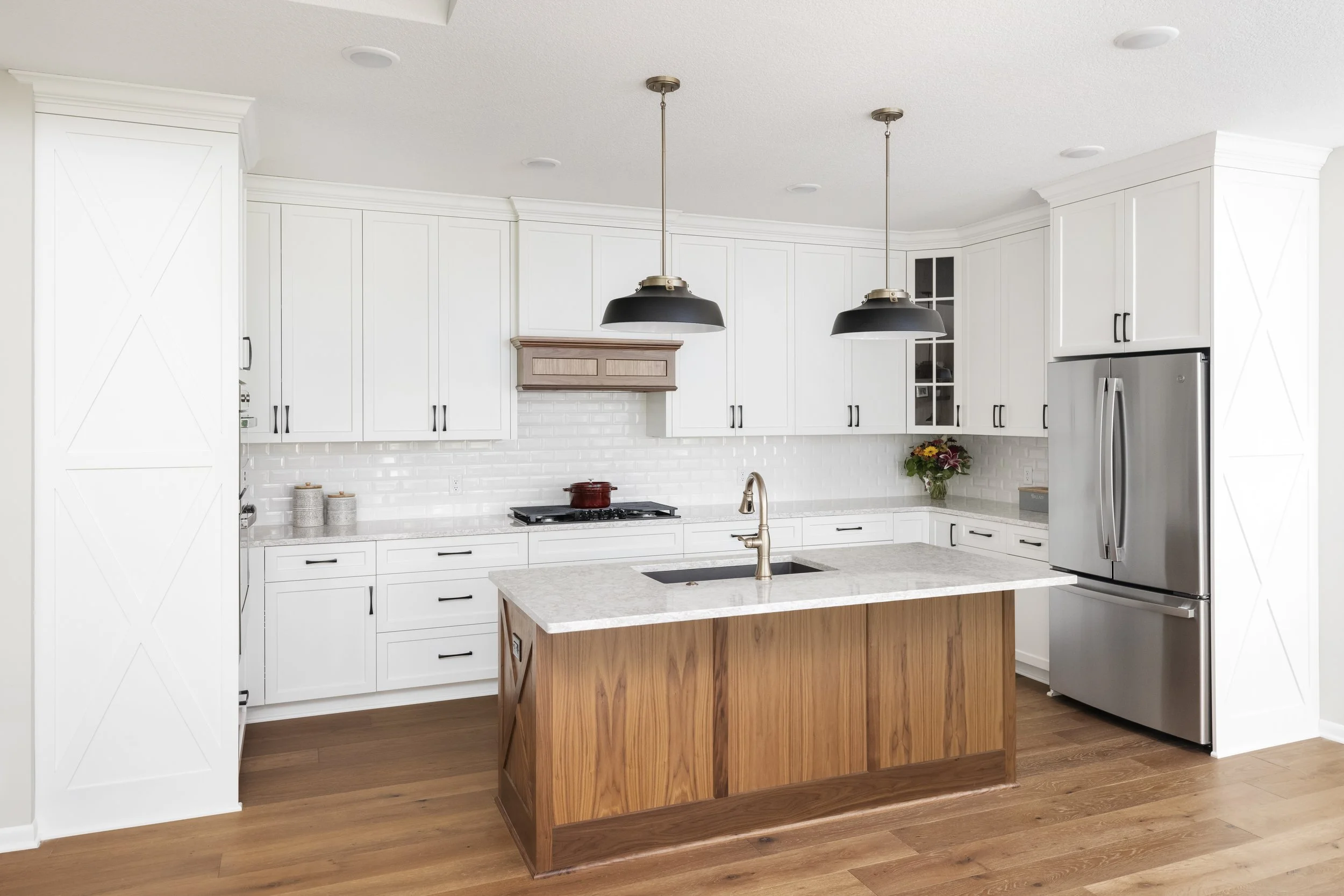
In many updated versions of the U-shaped layout, an island is added to the open end of the “U,” bringing even more function to the design. Placing the sink in the island, as shown here, keeps the perimeter counters clear for prep and cooking while allowing the person at the sink to face into the room. It also helps the kitchen feel more connected to nearby living and dining areas, turning a traditionally enclosed layout into something that feels open and social.
Proportions are key with this style. A U-shaped kitchen that is too narrow can feel tight, especially when more than one person is moving through the space. That’s why during the design phase, we focus on creating a wider, more open “U” that allows for comfortable circulation between each side.
Bringing It All Together with Sean’s Cabinetry
Sometimes we inherit a layout and focus on making the absolute most of what is already there. Other times, we get the chance to design from scratch, whether that is in a custom home or a full-scale remodel. That kind of creative freedom is exciting, but it can also become overwhelming quickly. With endless inspiration online and so many layout options to consider, decision fatigue can become very real.
As you explore different kitchen layouts, cabinetry colors, finishes, and overall flow, it becomes easier to see what truly fits your home and your lifestyle. Whether your days revolve around entertaining in an open-concept space or cooking in a cozy, highly functional kitchen where everything is within reach, the right layout makes all the difference.
That is where our team at Sean’s Cabinetry comes in. We help you sort through the options, design with intention, and create custom cabinetry that supports the way you actually live. If you are ready to reimagine your kitchen, we would love to work with you and bring a thoughtful, beautifully crafted space to life.